Jute or Golden fiber is the most versatile use of fiber that is mostly produced in Asian countries like India, Bangladesh, China, Nepal, etc. If you belong to these Asian countries, you may have already used any jute-made item in your life. Jute is useful in making insulation, geotextiles, activated carbon powders, flooring, garments, rugs, ropes, handicrafts, curtains, carpet backings, paper, sandals, carry bags, and furniture as well. Every part of the Jute plant can be used, for example, the outer layer of the stem produces fiber, and leaves can be cooked. The soft or inner part of the stem is used in the paper manufacturing industry. And this is why the jute industry has been thriving in Asian countries for centuries now.
The prime reason could be that Jute requires very little water and fertilizer compared to other crops. And it is a great framing option that has better profits than other crops. However, the whole jute production and processing industries are labor intensive. Still, Jute is one of the most used fibers all across the world, but whenever people hear jute, they either think about India or Bangladesh.
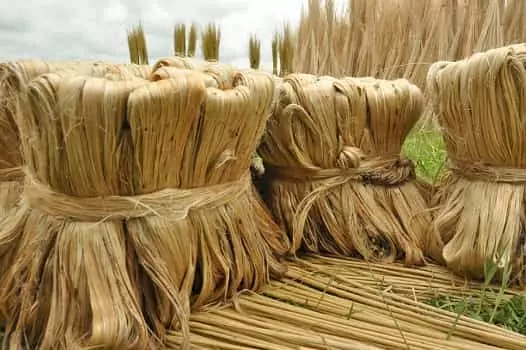
However, there are other countries as well that contribute to the global jute production amount, therefore today we will be taking a look at the largest producers of Jute in the world. Let’s talk about the interesting data and shine a light on other jute-producing countries as well. Shall we?
Top Countries for Jute Production in World
1. India
The jute industry in India is older than 150 years. Every year, the Indian jute industry produces over 1.968 million tonnes of jute. And this is what makes India the largest producer of jute in the world, followed by Bangladesh. West Bengal, Orissa, Bihar, Uttar Pradesh, Meghalaya, and Assam are the prominent states where jute cultivation is thriving. In India, over 6 to 7 lakh people get employment because of this jute industry. And nowadays, the government scheme for packaging reservation is helping jute cultivation and processing. This is the prime reason that you see wheat distributed by the government of India in jute bags. The financial year of 2022 data isn’t out yet, but it is estimated that India will surpass the amount of 2 million tonnes of jute production this year.
Also See: Top 5 Major Jute Producing States In India
2. Bangladesh

India produces the most amount of jute, but in terms of jute product exports, Bangladesh ranks number one. Bangladesh is a fairly small country compared to India and other countries in this list, but still, it produces a whopping 1.349 million tonnes of jute every year. And every year, Bangladesh exports 42% of its jute products to the international market. For many families and farmers in Bangladesh, the jute industry is the only income source. There are many processing factories all across Bangladesh for making jute fibers to use for jute products. If we compare Bangladesh to India in terms of jute production, then India surely wins the round but the production rate is way faster and better in Bangladesh.
3. China
The third largest jute producer in the world is China, but when compared to India and Bangladesh, China doesn’t stand a chance. China only produces 45 thousand metric tonnes of jute every year, which is negligible compared to India and Bangladesh. Agriculture is for sure thriving in China, but jute production isn’t. The prime reason is that Chinese farmers have far better options when it comes to cultivation. Still, some farmers produce jute so that the jute-made items demand in China can be fulfilled. However, China mostly imports jute from Bangladesh followed by India.
4. Uzbekistan

Nepal used to be the fourth largest jute producer in the world, but the production in Nepal has dipped a little, and Uzbekistan has taken over the fourth rank. Talking specifically about the production data, so last year, Uzbekistan produced just over 20 thousand metric tonnes of jute. Which is quite a good amount for a small country like Uzbekistan. However, the demand for jute-made products is fulfilled by importing jute products from India and Bangladesh.
5. Nepal

According to a statistical report from 2018, Nepal used to be the fourth largest jute producer in the world with an incredible number of 21 thousand metric tonnes in the financial year. But in the last few years, production has decreased by a few percent since many farmers want to seek better and more profitable opportunities. In Nepal, farmers have other crops that are more profitable than jute and require less labor. Still, last year, Nepal’s farmers were able to produce just over 18 thousand metric tonnes of jute. Most of which are processed and used to make jute products to sell for a better profit. Compared to other competitors, Nepal has less farming for jute cultivation and compared to other countries, the jute production rate is incredible.
6. Myanmar
Myanmar is another fairly small Asian country that contributes some amount to global jute production. However, it is not as significant as Bangladesh and India. Last year, Myanmar was able to produce 17 thousand metric tonnes of jute, which is fairly close to what Nepal produced last year. It is possible that Myanmar becomes the fifth largest jute producer in the world by pushing back Nepal to the sixth rank. Myanmar doesn’t export raw jute fiber to other countries, instead they have various processing plants and factories all across the nation to make products like jute bags, jute, handicrafts, wheat packaging, etc.
7. Thailand
The spa massages, nightlife, nature, and beaches are the prime reasons why Thailand is quite famous in the entire world. However, we could have stated that Thailand is known for its jute production but it’s not. Some farmers in Thailand are into jute cultivation, but the farmers’ number isn’t big enough to produce jute in large quantities. That is the reason, last year, Thailand was able to produce only 12 thousand metric tonnes of jute. And most of which is processed in-house to sell to foreign travelers and to the local population of Thailand.
8. Vietnam
Vietnam is known for its history and beautiful landscapes. That is the reason, the tourism industry is thriving in this small Asian country. After the war, Vietnam somehow recovered from the damage, and most of the industries are growing rapidly, for example, clothing, textile, metal production, etc. We could add jute production to the rapidly growing industries in Vietnam, but it isn’t. Instead jute production isn’t that considerable in Vietnam, the growth is slow but steady. That is why, in 2021-22, Vietnam produced nearly 12 thousand metric tonnes of jute.
9. Sudan

Sudan’s contribution to global jute production is somewhat negligible since it only produces a few thousand metric tonnes every year. For example, last year, Sudan farmers were only able to produce 3,350 metric tonnes of jute, most of which was used in-house. The main reason behind the low golden fiber/jute fiber production is that the environment and soil aren’t good enough for cultivating jute plants in large areas.
10. Egypt

The Egyptian jute is called “mulukhiyya” which is a little different than the Asian countries’ jute. Again, similar to Sudan, Egypt’s contribution to global jute production is also negligible. In 2021, Egypt only produced 2,508 metric tonnes of jute. Egypt’s environment is totally different than a typical Asian country, and that’s why jute production on large scale is impossible in Egypt. However, Egypt imports a good amount of jute from the top producers since in the local markets there’s a high demand for jute-made products, especially handicraft items.
Conclusion
Jute production brings income opportunities for many farmers in Asian countries like India, Bangladesh, Nepal, and China. However, other than the top producers, in other countries, jute production is started to decrease by a few percent every year. And we’ve spent a good amount of time talking about the various reasons behind that. Now you have a good understanding of what are the largest producers of jute in the world, and why countries like India, and Bangladesh lead the jute production globally.
The Future of Jute Production
Experts predict a steady rise in the global jute market in the coming years, possibly reaching significant figures by 2030. This growth is driven by several factors:
- Sustainability: Jute is environmentally friendly. It’s a fast-growing, biodegradable crop that captures carbon, using minimal water and pesticides. In today’s environmentally conscious era, these qualities are highly valued by both consumers and brands.
- Innovation: Ongoing research and development are breathing new life into jute. Improved processing and blending techniques are producing high-performance yarns suitable for clothing, home furnishings, and even food-grade applications. This opens up exciting possibilities beyond the traditional use in burlap sacks.
- Changing Preferences: Consumers are increasingly choosing natural and ethically sourced products. Jute’s inherent sustainability and support for rural livelihoods, especially in countries like India and Bangladesh, make it an appealing choice.
Despite the positive outlook, challenges persist. Upgrading infrastructure, enhancing farmer incomes, and effectively promoting the unique qualities of jute are essential steps.
The future of jute doesn’t just involve reviving old markets but also creating new ones. Picture fashion runways adorned with jute blends, homes decorated with its natural elegance, and a world gradually moving away from plastic in favor of this eco-friendly alternative. With the right vision and collaborative efforts, jute can reshape its story, not merely as a relic of the past but as a green champion for the future.
World Jute Production FAQs
Q1: Which countries are the largest producers of jute?
Ans: The largest producers of jute are Bangladesh and India. These two countries account for the majority of global jute production. Other notable jute-producing countries include China, Thailand, Myanmar (Burma), Nepal, and Uzbekistan.
Q2: How is jute production measured?
Ans: Jute production is typically measured in metric tons (MT) or kilogram (kg). It refers to the total amount of raw jute fiber harvested and processed within a specific time frame.
Q3: What are the main uses of jute?
Ans: Jute has a wide range of applications. It is primarily used for making sacks, bags, and packaging materials due to its strength and durability. Jute fibers are also used in the production of carpets, rugs, mats, and geotextiles. Additionally, jute is used in the textile industry to create various products like curtains, upholstery, and fashion accessories.
Q4: How is jute cultivated and harvested?
Ans: Jute plants are typically grown in warm and humid regions with well-drained soils. The cultivation process involves preparing the land, sowing jute seeds, and providing appropriate irrigation and fertilization. The plants grow to a height of about 10-12 feet (3-3.5 meters) within 4-5 months. Once mature, the plants are harvested by cutting the stems close to the ground. The harvested stalks are then bundled and soaked in water to allow the fibers to be separated from the woody part of the plant.
Q5: What is the global jute production like?
Ans: The global jute production varies from year to year based on several factors such as weather conditions, demand, and agricultural practices. The total global production is estimated to be around 3.2 million metric tons annually.
Q6: Is jute production sustainable?
Ans: Jute production is considered to be relatively sustainable compared to other types of fiber production. Jute plants are known for their high carbon dioxide (CO2) assimilation rates, which contribute to reducing greenhouse gas emissions. Jute cultivation also requires fewer chemical inputs and fertilizers compared to other crops. Additionally, jute is a renewable resource as it can be harvested multiple times in a year, and its cultivation helps in soil conservation and prevents erosion.
Q7: Are there any challenges or issues related to jute production?
Ans: While jute production has several advantages, there are also some challenges associated with it. One of the main challenges is the competition from synthetic fibers, which are often cheaper and more widely available. The demand for jute has declined in certain markets due to the availability of synthetic alternatives. Additionally, jute cultivation can be affected by pests, diseases, and adverse weather conditions, which can impact the quality and quantity of the crop. Efforts are being made to address these challenges and promote sustainable jute production.