Setting up a living room from scratch is exciting and confusing at the same time, you know that phase where the house is new, walls are still smelling of paint, cartons are lying everywhere and everyone in the family has a different opinion. The living room matters the most because this is where guests sit, where we crash after office, where kids spread toys and where weekend chai sessions happen. New homeowners usually struggle with one big thing. What to buy first and what can wait. That is why planning your living room furniture before swiping the card becomes very important. If you do not plan, you either end up buying too much or buying things that do not work together at all. This checklist is like that one sensible friend who tells you “first take these things, we will sort the rest of things later”.
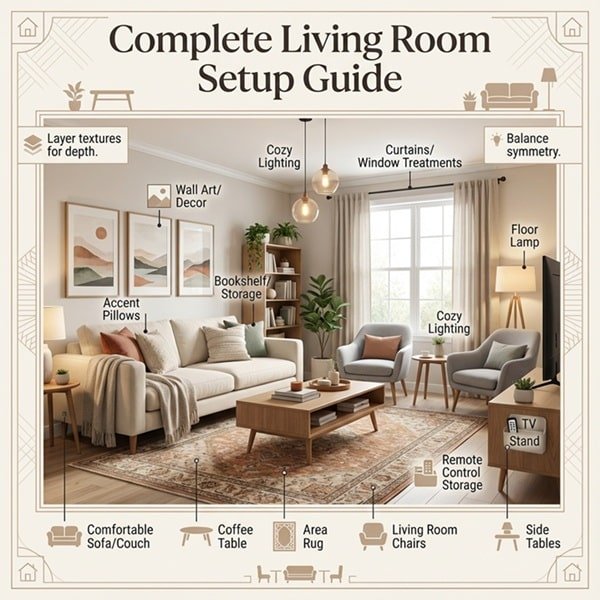
1. Seating Essentials where Comfort Meets Daily Use
Seating is the backbone of any living room. Everything else comes later. You can have the fanciest rug but if there is no comfortable place to sit, the room feels incomplete.
Sofa sets
- 2 seater sofas work best for smaller flats and rented homes
- 3 seater sofas are perfect if you have a medium sized living room
- L shape sofas are great when the living room is also your movie night zone
Before buying, always think about:
- How many people live in the house
- How often guests come over
- Whether you like sitting straight or lounging
Accent chairs and extra seating
Accent chairs are those pieces that quietly save the day when extra guests arrive.
- Single accent chairs near the window
- Ottomans that can double up as footrests
- Small stools that can be tucked away easily
Choose seating based on your actual lifestyle and not just what looks good in pictures. Families who love sitting together need deeper seats, while homes with elders need firmer cushions. Options like a sofa cum double bed add extra practicality for modern homes, and stores like Wooden Street make this easier by allowing you to mix and match seating solutions without going overboard.
2. Tables and Surfaces You Will Actually Use Every Day
Tables are not just furniture pieces, they are workhorses. Remote controls, tea cups, laptops, books, everything lands here.
Center tables and coffee tables
- Center tables work well in larger spaces
- Coffee tables are better for compact homes
Things to check before buying:
- Height should match your sofa seat
- Enough surface area but not blocking movement
- Rounded edges if kids are around
Side tables and nesting tables
- Side tables next to sofas for lamps and chargers
- Nesting tables are perfect for small homes because you can pull them out only when needed
Material choices matter here. Glass tables look light but need regular cleaning. Wooden tables feel warmer and hide daily wear better. Placement is key. Tables should support movement and not force people to walk around them awkwardly.
3. Storage and Display Furniture You Should Not Skip
This is where most new homeowners make mistakes. They focus on seating and forget storage, then complain about clutter later.
TV units and entertainment consoles
A TV unit does more than hold the TV.
- Hides wires
- Stores remotes and gadgets
- Adds structure to the room
Choose based on:
- Wall size
- TV size
- Storage needs
Display cabinets and shelves
- Open shelves are great for books and decor
- Closed cabinets help hide mess
- Wall shelves save floor space
Open vs closed storage
- Open storage looks airy but needs regular organising
- Closed storage keeps the room looking calm
The trick is to mix both. A closed television panel design with open shelves around it works very well for Indian homes, where we value both visual display and everyday practicality.
4. Comfort, Decor and Functional Add-Ons That Complete the Room
Once the main furniture is sorted, these smaller things bring life into the living room.
Rugs, curtains and lighting
- Rugs help define seating areas
- Curtains add softness and privacy
- Basic lighting sets the mood
Choose rugs that are easy to clean and curtains that match wall colours. Avoid very heavy fabrics if the room is small.
Cushions and decor accents
- Mix plain and printed cushions
- Keep cushion covers washable
- Add a throw for cosy evenings
Decor should feel personal. Family photos, travel souvenirs, handmade pieces always work better than random showpieces.
Mirrors and plants
- Mirrors reflect light and make rooms feel bigger
- Plants add freshness and balance
Even one big mirror or two small plants can change how the living room feels without spending too much.
5. Final Living Room Checklist and Smart Buying Tips
Before you start shopping, go through this simple checklist.
For small living rooms
- Compact sofa or L shape
- Coffee table or nesting tables
- Wall mounted TV unit
- One accent chair
- Light rug and curtains
For medium to large living rooms
- 3 seater sofa with extra seating
- Center table plus side tables
- TV unit with storage
- Display shelves
- Larger rug and layered lighting
Budget planning tips
- Spend more on sofa and storage
- Save on decor and side tables
- Choose solid materials for daily use
Material selection
- Wood for long term use
- Fabric that is easy to clean
- Avoid very delicate finishes
Mistakes to avoid
- Buying everything at once
- Ignoring room measurements
- Choosing style over comfort
- Forgetting storage needs
Take your time. Live in the space for a few weeks before adding more pieces. Many homeowners rush and later regret it.
Brands like Wooden Street help new homeowners because you can plan the whole living room together instead of buying random items from different places. Their store setups give a clearer idea of how furniture will actually look inside a real home. And yes, visiting Wooden Street again once you settle in often helps when you want to upgrade slowly without disturbing the balance of the room.
Final Thoughts
Your living room does not need to look perfect on day one. It needs to feel comfortable, functional and welcoming. Start with the essentials, add pieces slowly and let the room grow with your family and routines. A well planned living room always feels better than a rushed one. And honestly, that feeling of sitting in your own living room after a long day, chai in hand, everything placed just right, that is what makes a house feel like home.