The welds on modern medical devices should be clean and reliable. Weak joints may reduce product lifespan, accuracy, or pose safety risks to patients and clinicians. That is why manufacturers now require welding plans that support both functions and finish.
Medical Welding in more complex device manufacturing is important as it contributes to sterility, repeatability, and high-quality control. It is not merely about joining metal components but also about safeguarding the performance of tools, implants, sensors, and fluid systems. Combining this work with a TIG method allows the manufacturers to have enhanced control over heat, shape, and surface quality.
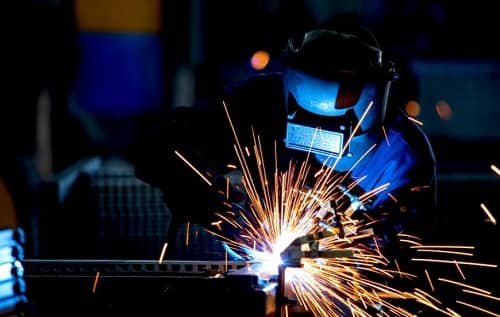
Why Integration Matters in Device Manufacturing
Stainless steel, titanium, nickel alloys, and other metals are also commonly used in medical parts. However, their reaction to heat varies. It is quite possible that a technique that is successful on a large housing would not be at all effective on a fine tube. Integration is important because it allows engineers to adopt a single, clear weld approach.
Such an interdisciplinary approach also reduces issues among the design, welding, inspection, and finishing teams. By creating the welding plan early, the team can prevent poor fit-up, excessive distortion, and surface scars that lead to scrap.
Heat Control, Geometry, and Surface Integrity
Metical welds are achieved with proper heat input, consistent arc behavior, and proper joint cleanup. Overheating in small machinery may cause distortion of parts, broadening of the heat-affected area, or alteration of the metal structure at the seam. Insufficient heat can result in insufficient fusion, pinholes, or high seals that rupture under pressure, during fatigue, or during leak testing.
This is where Precision Tig Welding can be particularly useful, as it provides operators and engineers with tight control over arc length, travel speed, and filler consumption. The latter is assisted by that control which safeguards the fragile forms of catheters, instrument shafts, battery casings, and miniature enclosures.
Practical Design Priorities Before the Arc Starts
Welding becomes a good way to start before one turns on the torch. Designing teams that are oriented toward access to the welding line, joint stability, and fixture stability tend to have fewer defects and reduced rework. On the pre-weld checklist, a simple list of things to remember may keep these priorities clear:
- Where practicable, match wall thickness in the interest of even distribution of heat.
- Maximize the tightness and the consistency of the joint gaps in all batches.
- Select fixtures that do not leave marks on the part.
- Plan purge gas flow areas enclosed or oxidation sensitive.
- After welding, allow room for inspection, cleaning, and passivation.
Cleanliness, Repeatability, and Compliance
Cleanliness in medical manufacturing is not initiated after welding. It starts with the raw material handling process, tool status, glove wear, and controlled storage, and then the part is brought to the workstation. This may cause discoloration, inclusions, and defects that are more difficult to detect in smaller assemblies and may result from oil, particles, or shop dust.
Repeatability is equally important as cleanliness, since medical products are supposed to work in a similar manner each time. This is why lots of teams predetermine the torch angles, current windows, shielding gas settings, and the location of the fixtures in written instructions.
Where Integration Creates the Most Value
Bigger profits can be observed in cases where welding is considered in the device’s design system, rather than as a final manufacturing task. When engineers are informed about the medical demands and the TIG requirements at early stages, they can minimize cosmetic rework. This strategy also assists purchasing teams in selecting materials that are weldable, corrosion-resistant, and cost-effective.
It is also useful in mixed products plants where both complex and simple devices are manufactured. A common welding infrastructure simplifies the training process, reduces setup time, and provides a quality team with more defined acceptance criteria. The factory will not solve the defect. Instead, it will create a repeatable route between prototype and tested production.
Common Mistakes That Weaken Weld Performance
Focusing on bead appearance while ignoring purge quality is a common error. The presence of the shiny surface does not necessarily eliminate weak fusion or impeded contamination that will manifest later in use. In medical manufacturing, a more profound perspective is needed that relates visual inspection to long-term corrosion behavior.
The other mistake is imposing a single weld recipe on parts with vastly divergent shapes. Slender sections, massive hubs, and small, closed systems do not react to heat as much. Essential manufacturers establish parameter windows on a part-family basis and optimize them using test data rather than guesses.
To summarize, as machines shrink and become more advanced, welding has to be more of a disciplined process and tied to the entire manufacturing process. When design teams, weld engineers, operators, and quality staff operate off the same plan and aim at the same goals, the best results will be achieved. That collaboration results in safer equipment, reduced scrap, finer finishes, and enhanced long-term performance.