Life became much more comfortable when shopping moved online. If a business does not accept online payments, it steadily loses profit. After reading this article, a reader will see the basic difference between a gateway and a processor, understand how money moves on the internet, which types of payment solutions exist, and how to optimise financial flows for growth, including international operations.
When a company wants to accept and process electronic payments, it must build a clear payment process with the right tools and payment methods, not only open a bank account.
What Is a Payment Gateway and How Payment Gateway Work
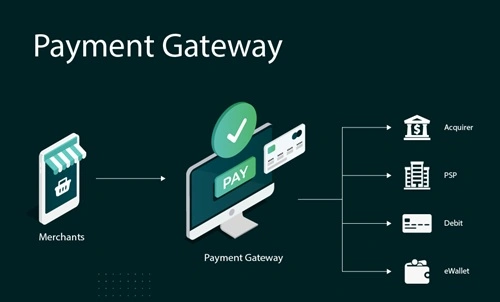
A technological solution that provides secure transfer of payment card data from the client to the acquiring bank is called a payment gateway. In simple words, a payment gateway is a technology that connects the website or app to the bank and to the payment network.
In fact, this tool often works as a virtual POS terminal. Through secure channels, it encrypts and routes confidential payment data. A gateway is a payment tool that stays between the client, the merchant and the bank.
It can also:
- store tokenised payment card data, so recurring payment is easier
- support 3-D Secure authentication
- integrate with many alternative payment methods
Such flexibility allows a business to offer clients a more personal payment process and payments using different options. In this way, the payment gateway serves both the merchant and the client.
What a Payment Gateway Does
The work of the payment gateway starts at the moment when the buyer presses «Pay» on the site and begins to enter their payment data. After that, nothing magic happens:
- The system safely collects the entered payment details. It collect the data that clients fill in their payment details in the form.
- It encrypts them and transfers them for checks. The payment gateway encrypts the data, and this helps to meet card industry data security requirements (PCI DSS).
- Then the payment gateway sends the encrypted package of data to the payment processor.
- This component already contacts the issuing bank of the card.
- Authorisation takes place.
When the answer comes back, the gateway decrypts it. It turns the answer into approval or decline. Providing fast processing of transactions, the payment gateway ensures quick reaction for the buyer. This sequence of actions happens in a few seconds and creates a secure and seamless payment for all parties.
Expert advice from Rohan Malhotra, Paykassma’s Payment Services Consultant:
«Do not choose a gateway only by the lowest fee. Uptime in 99.99 % and the speed of work with peak loads during sales are often more important, because they help keep conversion».
How Payments Online Move Through the System
The process itself looks like a relay race where the participants perform their tasks:
- The client starts the process by entering payment data.
- The gateway processes it.
- After encryption, the data goes to the processor.
- This link connects to the payment network, Visa, Mastercard or another system.
- The request is processed, at this time there is a wait for an answer from the issuing bank.
- If there are enough funds, the amount is blocked until the authorisation code is entered.
- The received money goes into hold.
- Then the money goes to the merchant’s account minus fees. In general, this takes from one to three days.
This is the path that money from payments from customers goes through, although it seems to the client that the payment process is much faster. Payment gateways typically hide this complexity. Payment gateways facilitate this movement and send data to the payment processor and back.
Why Do Businesses Need a Payment Gateway?
The simplest answer is to accept payments. But not only this. A payment gateway helps to create safe conditions.
If a merchant tries to process card payment on its own, risks grow. Sensitive payment data of the client can go to fraudsters, because the page is not protected by strong encryption. Data becomes more open, and financial payment fraud risk grows together with it.
Besides this, payments using such tools build a positive user experience. When clients feel safety, they return more willingly. Loyalty appears and grows. A payment gateway helps to form this feeling and gives a more seamless payment experience on the site or in the app.
Payment Gateway and a Payment Processor — Main Differences
Yes, the terms are often used as synonyms. Despite their connection in one chain, these are still different things. The main difference lies in the field of responsibility. The gateway focuses on safe collection and first transfer of payment details.
The processor works in the back office and deals with financial logistics, clearing and bank settlements. Some companies offer complex solutions «all in one», combining both roles, so payment gateways and payment processors work inside one platform.
Others specialise only in one direction, and this can give an advantage in flexibility or special functions. The right choice of architecture of the payment ecosystem defines its scalability. In many cases, the choice of a particular model of gateway depends on geography, risk and business goals. A payment gateway is crucial for stable work with card payment and other flows.
How a Payment Processor Handles Transactions
It is a direct duty of the processor to contact the right payment network. The request goes to VisaNet or Mastercard Network so that the transaction can be checked. This request, which has the amount, currency and merchant data, goes to the issuing bank of the buyer’s card. If this does not happen, there will be no authorisation.
After the issuing bank sends an answer approval or decline, the processor sends it back to the gateway. However, its work does not stop there. At the end of the operating day, the processor performs clearing. This is the batch check of all authorised transactions that happened during the day.
The final stage is settlement. The processor instructs the acquiring bank the merchant’s bank to debit funds from accounts of issuing banks, connecting networks. In some models, the same system can also help with vendor payments and other payouts.
Gateway vs Processor in Accepting Payments
The difference in practice appears when a failure happens. If a problem appears at the step of card entry or at the display of the payment page, this is usually the area of the gateway. If the transaction is authorised, but money did not come to the account in time or there was a clearing error, the question goes to the processor.
Separation of these functions between different providers can make technical support more difficult, but it allows a company to choose the best solutions.
It is useful to compare other parameters too:
| Criterion | Payment gateway (Gateway) | Payment processor (Processor) |
| Main function | Secure collection and encryption of card data, interaction with the client. | Routing of the transaction, connection with payment networks and banks, clearing and settlement. |
| Place in the chain | Front end, entry point of data. | Back end, logistics of financial flows. |
| What the client sees | Payment form, process where clients enter their payment data, result of authorisation. | Does not see directly. |
| Main metrics | Uptime, response speed, UX of the payment form. | Share of successful transactions, speed of fund crediting, cost of processing. |
| Responsibility for | Safety of data transfer, correct work of the payment page. | Correct settlements with banks, respect of regulatory norms. |
So both elements are necessary, but they solve different tasks. A successful payment needs perfect work from both the gateway and the processor. Payment gateways play the role at the front, and processors work inside broader payment processing.
Choosing the Right Payment Service Setup
Returning to the question if the solution must be combined or it is better to choose a separate gateway and a separate processor, it is important to think about the final result.
A complex solution, or all in one, makes integration, technical support and billing easier. All fees and technical questions are solved through one partner, and this saves time on administration. However, this approach sometimes means less flexible tariffs. There is also a strong connection to the ecosystem of one vendor.
A separate model best of breed allows a business to choose the best gateway in terms of UX and integration and the best processor in terms of cost and geography. This gives maximum flexibility and the possibility to tune the system for special needs of the business.
It is useful for work with rare local payment methods in different countries and with various payment modes. The other side is higher complexity of the first setup. Also, it is necessary to coordinate work with several suppliers at once. Selecting the right payment gateway and processor setup becomes an important step here.
Different Types of Payment Gateways and Payment Solutions
One model can give maximum security and simplicity for the merchant, but send the client outside the site. Another model allows the company to create a unique design of the payment process, but needs big resources for data protection. It is important to understand these differences.
Expert advice from Olufifun A., Paykassma’s Payment Services Consultant:
«When moving to a headless architecture, remember that full control over the payment interface also means full responsibility for its security, availability and convenience. Check in advance if developers and designers are ready to take this task instead of trusting a ready solution from the provider».
Hosted vs On-Site Gateways
Here the gateway redirects the client to a secure payment page managed by the provider. The buyer enters card data not on the shop site, but on an external domain, then comes back for order confirmation. This approach moves the main PCI DSS duty to the service provider, and this strongly reduces risks. Such a model is often a type of hosted payment solution.
However, it breaks the user journey and can create less trust.
There is also an on-site or self-hosted option. With this option, it is possible to accept payment data directly on the company site. The process goes without redirection, and this creates a more seamless payment and fully branded flow. The client sees one interface from product choice to confirmation.
The main disadvantage is high responsibility. The merchant must provide the highest level of infrastructure security. It is also important to pass strict PCI DSS certification, and this needs serious resources. In such cases, the gateway connects directly to the merchant systems and must work as a robust payment tool.
API-Based & Headless Payment Solutions
Such a gateway gives developers a set of tools API to create a fully custom payment form integrated into the site or mobile app. Payment card data is encrypted on the client side with tokenisation technology. Then it goes to provider servers, and does not pass through merchant servers. In this way, the gateway securely captures and transmits payment data.
This is a modern hybrid approach that combines control over design like on-site solutions with lower PCI DSS demands.
The next level is headless payment solutions. In this architecture, the back end of payment functions logic, links with the processor is fully separated from the front end interface. The company can use any framework to create the payment interface, from a website to a smart fridge. Payment gateways use this logic inside, while the visible layer can be very different.
Scalable Payment Options for Growing Businesses
A scalable payment system must adapt easily to higher transaction volume. The first sign of scalability is modular architecture that allows to add new:
- methods
- currencies
- processing power
Routing is also important, because it allows the system to send transactions from a certain region to a local processor and this raises approval rate. This is useful for credit and debit card payments in different markets. Payment options like local wallets or bank transfer can also go to local partners.
International Payment Gateway and Global Payment Information
Not every gateway will fit, because not all have access to global payment systems. In contrast to local solutions, such a gateway supports a wide range of international payment methods, from global card schemes to hundreds of local options like iDEAL in the Netherlands, UnionPay in China or Pix in Brazil. Its main task is to present one simple interface for the merchant.
Besides support of different ways to pay, the gateway must:
- process currency conversion correctly
- respect local rules
- adapt the interface to language and culture
For the client, the process must look as simple as buying from a local seller. Integration with such a gateway opens access to global markets, but it needs careful planning. A payment gateway depends on partners and regions, so it is important to see this picture in advance.
How International Payments Work
An international online transaction technically goes through the same stages as a local one. The difference is that there are extra checks.
Here is what makes the process more difficult:
- More players in the chain. International networks, foreign issuing banks, sometimes local processing centres join.
- Currency question. Conversion can happen anywhere, on the side of the buyer bank, in the merchant’s gateway or in the processor. Each one will add its own margin.
- Different rules. In the EU, Strong Customer Authentication is mandatory, in other regions there are their own data protection norms.
For the client, the difference is often visible in one detail. The system can offer to pay in the client’s own currency or in the shop currency. The choice «pay in own currency» on a foreign site, this is how Dynamic Currency Conversion works. It is convenient, but the rate is usually not profitable.
Expert advice from Ella Moore, Paykassma’s content writer:
«Always ask the provider for a detailed price list with a split by card types and countries. A low base rate of 1.9 % can grow to 3.5 % for premium cards from the USA. Model real costs based on transaction history».
Local Methods, Currency Conversion & Compliance
Success abroad depends on habits. Clients in Germany like Sofort, in the Netherlands iDEAL, in Brazil Boleto. Not everyone has foreign cards, and trust in local methods is much higher.
So an international gateway must:
- accept local payment methods, without this conversion rate will fall
- convert currency honestly, show the final sum in client currency before payment and use a clear rate
- respect many regulatory norms, from European PSD2 to local tax rules
A good provider takes such compliance pain on itself. It builds KYC checks, SCA authentication and controls sanction lists inside the system. The business must only set correct scenarios.
Keeping Payment Information Secure
Protection is built in several layers. The base level is PCI DSS. Without this certificate, it is not possible to work with cards. The gateway takes this duty on itself, and this reduces pressure for the merchant.
The technological level already relates to:
- Tokenisation, it replaces card data with a unique code. It can be stored for recurring payment without big risk.
- 3-D Secure, it sends the buyer to the bank for confirmation through a code from SMS or an app.
- Advanced level, machine learning. The system checks many parameters, from speed of data entry to IP address, and gives a risk score to the transaction. Suspicious one is blocked or needs extra confirmation.
Balance is the key here. Very strict rules will push honest clients away, very weak rules will open the way for fraudsters. A payment gateway helps to keep this balance and ensures payment data protection on every step.
Payment Gateway Integrations and Payment Page Optimization
The process that defines stable work of the whole financial operation is called integration. Optimisation of the payment page directly affects the most important business metric, conversion. These two aspects are closely linked, even the most advanced technical integration will not help if the payment process itself is hard for the client.
It is simpler if the business works on a popular platform. Payment gateways and payment processors often give ready tools for that.
CMS & E-commerce Integrations
For Shopify, WooCommerce, 1C-Bitrix and others there are ready modules. A merchant installs them, sets them in a few hours and can accept payments online.
Pros:
- Fast and without developers.
- Automatic sync of order and refund statuses.
- Regular updates from the provider.
Cons:
- Limited customisation.
- Dependence on plugin update speed.
- Standard UX that is not always ideal.
The plugin is chosen by reputation, update frequency and reviews. An old module can break after a CMS update and stop all sales. Payment integration quality becomes very important here.
API Integrations for Payments Effortlessly
This is a clear choice for those who need full control. Developers get access to a set of tools and build payment into any interface, website, mobile app, smart TV.
This allows to:
- create a unique, branded payment process
- set complex scenarios, subscriptions, one-time charges, split payments
- avoid redirection to external pages
The price of such control is time and money for development. A company needs its own team that will support the integration. Payment gateways typically give detailed documentation and examples, but work is still on the merchant side.
Optimizing the Payment Page for Higher Conversions
Bottlenecks can also appear on the payment page. Here are some points that make clients stop:
- Slow loading. Even plus one second means minus conversion.
- Doubts about safety. No HTTPS, strange design, no known logos.
- Too many fields or unclear hints.
What works:
- Speed, minimum scripts, image optimisation, fast hosting.
- Trust, SSL certificate, logos of Visa, Mastercard, PCI DSS.
- Simplicity, guest checkout, auto-fill, progress bar.
- Clarity, final sum with all fees is shown before «Pay».
The best way to improve is A/B tests. Change text on buttons, number of fields, background colour. Look at numbers, not feelings.
Payment Gateway Fees and Cost Factors
Fees are not only a percentage from the transaction. Total cost comes from many factors, and hidden ones can eat all margin.
Here is what the bill usually consists of:
| Fee | What it is for | Who it affects most |
| Percentage from transaction | Main payment for processing. | Everyone, the higher the average ticket, the higher the sum. |
| Fixed payment | Extra sum for each operation on top of the percentage. | Businesses with many small payments. |
| Monthly fee | For access to the dashboard and support. | Small business with low turnover. |
| International markup | Extra percentage for foreign payments. | Companies that sell actively abroad. |
| Chargeback fee | Penalty for dispute processing, even if the merchant is right. | High-risk niches or bad service. |
| Currency conversion | Percentage for transfer of money into the merchant account currency. | International companies. |
The main thing is to look at the full cost of ownership. Many payment plans exist, and it is important to see all parts.
Transaction Fees
The rate depends on card type:
- debit cards are cheaper
- credit and premium cards, such as Visa Infinite, Mastercard World Elite, are more expensive, banks take more for bonus programmes
Online card payment card not present always costs more than payment with a card in a shop card present, because risks are higher.
International Fees
Besides higher percentage, there are hidden costs:
- Conversion fee. The rate in the interface is one, the real exchange rate in the bank is another. The difference is the provider margin.
- Issuing bank fee. The client bank can take a payment for an international transaction. The client sees it in the statement and can be unhappy.
How to optimise:
- Open a multi-currency account and accept payments in euro, dollars, yuan.
- Connect to local processing through an aggregator. For the client bank the payment becomes «internal».
Additional Costs to Consider
These are the ones that many forget until the bill comes.
- Setup fee for integration. One-time payment for connection.
- Payment for extra services, advanced fraud protection, white-label payment form, API licences above the limit.
- Payment for data migration when changing provider.
- Payment for premium technical support if quick reaction of a specialist is needed.
It is important to ask the provider for a full price list and model costs on a typical volume. Often it is more profitable to pay a bit higher percentage, but without monthly fees and hidden payments.
The choice of payment system architecture is a strategic decision that defines how fast the business will grow. A right gateway, clear payment process and careful work with various payment methods together form a stable base for future development.