The sirens were the first clue.
Power flickered. The grid went down. Cell towers overloaded. And just like that—modern communication vanished. No texts. No service. No bars.
But one thing still worked: a walkie-talkie.
This isn’t just some nostalgic nod to simpler times. When hurricanes roll in, wildfires spread, or a cyberattack takes out your network, walkie-talkies prove time and again that they’re not outdated—they’re essential.
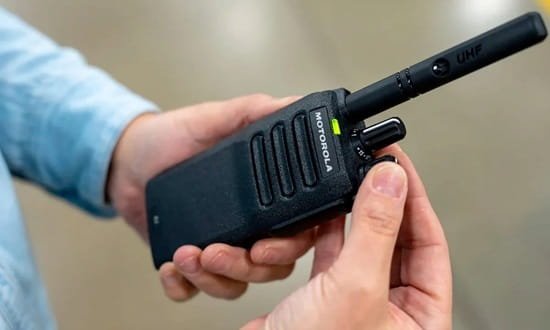
Why? Because walkie-talkies don’t ask permission to work.
No signal? No network? Doesn’t matter.
Most of the tech we depend on—cell phones, email, GPS apps—relies on an invisible but fragile web of infrastructure. Towers. Fiber. Satellites. Power.
Remove one piece, and the whole thing can collapse.
But walkie-talkies use radio frequencies, meaning they connect directly with other devices nearby. No need for cell service, data plans, or even electricity beyond what’s powering the device.
Which leads to the big question:
Do walkie-talkie need cell service to work?
Spoiler: No. That’s the point.
Fast. Reliable. Direct.
There’s no dialing. No signal bars. No waiting.
You press a button. You talk. Someone answers—instantly.
This kind of communication becomes mission-critical when:
- First responders coordinate across multiple locations
- Event staff lose access to mobile networks during high-traffic surges
- Schools need fast, campus-wide alerts during an emergency
- Construction teams operate in remote areas with no coverage
- Businesses face a power or internet outage but still need to function
In these moments, reliability matters more than bells and whistles. And walkie-talkies? They just work.
Built for Tough Conditions—Literally
Walkie-talkies are engineered for environments where modern tech fails.
They’re rugged. Dustproof. Weather-resistant. Designed for warehouses, mountainsides, stadiums, and disaster zones. They last hours (even days) on a single charge or set of batteries. No fragile glass screens or “low battery” panic after 90 minutes of use.
So when you’re knee-deep in snow, stuck in a blackout, or managing 5,000 people at a concert—your walkie-talkie isn’t going to ghost you.
The Myth of “Old Tech”
Sure, walkie-talkies have been around for decades. So has the wheel. Longevity doesn’t mean obsolete—it means proven.
And modern walkie-talkies? They’ve leveled up. Some models now:
- Reach across entire campuses or cities using private networks
- Offer GPS tracking for team visibility
- Have encryption features for secure channels
- Include group messaging, text alerts, and audio recording
The point is: this isn’t your childhood toy walkie. It’s a tool built for serious communication when the stakes are high.
Why Not Just Use Phones?
It’s a fair question. Until you remember:
- Cell service gets jammed during emergencies
- Wi-Fi fails when the power’s out
- Mobile apps crash under network strain
- Group texting is chaotic and unreliable
- Batteries die fast under constant use
Phones are great—until they aren’t. Walkie-talkies fill that gap.
They don’t care about network congestion. They don’t freeze or crash. They don’t wait for software updates. They’re not tethered to cell towers.
And when every second counts? That’s the kind of communication you want.
Final Thought: Infrastructure Isn’t Invincible—Your Communication Should Be
From wildfire evacuations to festival logistics, from hospital security to backcountry trekking—walkie-talkies have one job: keep people connected when everything else fails.
No signal? No service? No sweat.
They’re still working while your phone stares blankly back at you.
So the next time you plan for safety, operations, or continuity—ask yourself:
What’s your backup plan for communication?
If it’s a walkie-talkie, you’re already ahead.
Because staying in touch shouldn’t depend on the cloud staying up.